Behind the video
Directing a Music Video With No Camera
DOMI — 7 June 2026
We're a DIY band. No label, no film budget, no director for hire. When we finished 'Hele Landet Fyrer,' we wanted a music video that matched what the song was actually about — so we tried to make one ourselves. With AI. Here's how it went.
The AI handled the production side. The story, the script, and the creative decisions were ours.
The story came first
Norway hasn't been at a World Cup since 1998 — 28 years of near-misses, heartbreak, and stubborn hope. That's what the song is about. So the video had to tell that story, mapped beat-for-beat to the lyrics.
| Song section | Visual story |
|---|---|
| Intro | The band on stage at Rockefeller |
| Verse 1 | The past 28 years — hard times, near-misses, never giving up |
| Pre-chorus (×3) | The band arriving for the match |
| Chorus 1 | Ullevål. Norway vs Moldova. That qualifier goal. |
| Verse 2 | Norwegian people facing all weather, still showing up. Kids in the snow. "Vi danser klønete, men vi danser fritt" |
| Chorus 2 | San Siro. Italy. Still qualifiers, but suddenly it feels possible. |
| Bridge | Sentrum Scene — the concert erupts |
| Last pre-chorus | Kontraskjæret — fans together, national pride |
| Final chorus | Boston. Norway vs France. The dream. |
'Vi vet vi er underdogs' isn't just a lyric. It's the whole mood of the video.
The visual style
We wanted an illustrated style — something that felt like a cartoon we might have actually watched growing up. Later Mike Judge, a bit of Archer. Not the really crude early stuff, but that flat, clean, slightly ugly-on-purpose adult animation that has a lot of warmth underneath it.
It also suited the song. 'Hele Landet Fyrer' is self-deprecating and rowdy — 'vi danser klønete, men vi danser fritt.' A glossy, polished video would feel wrong. A cartoon that doesn't take itself too seriously felt right.
The production bible
Getting AI to be consistent across 60+ clips is hard work. Our solution was to build a full production bible before generating a single frame — the same thing a film shoot uses to keep continuity across scenes, just done with images instead of wardrobes and set dressings.
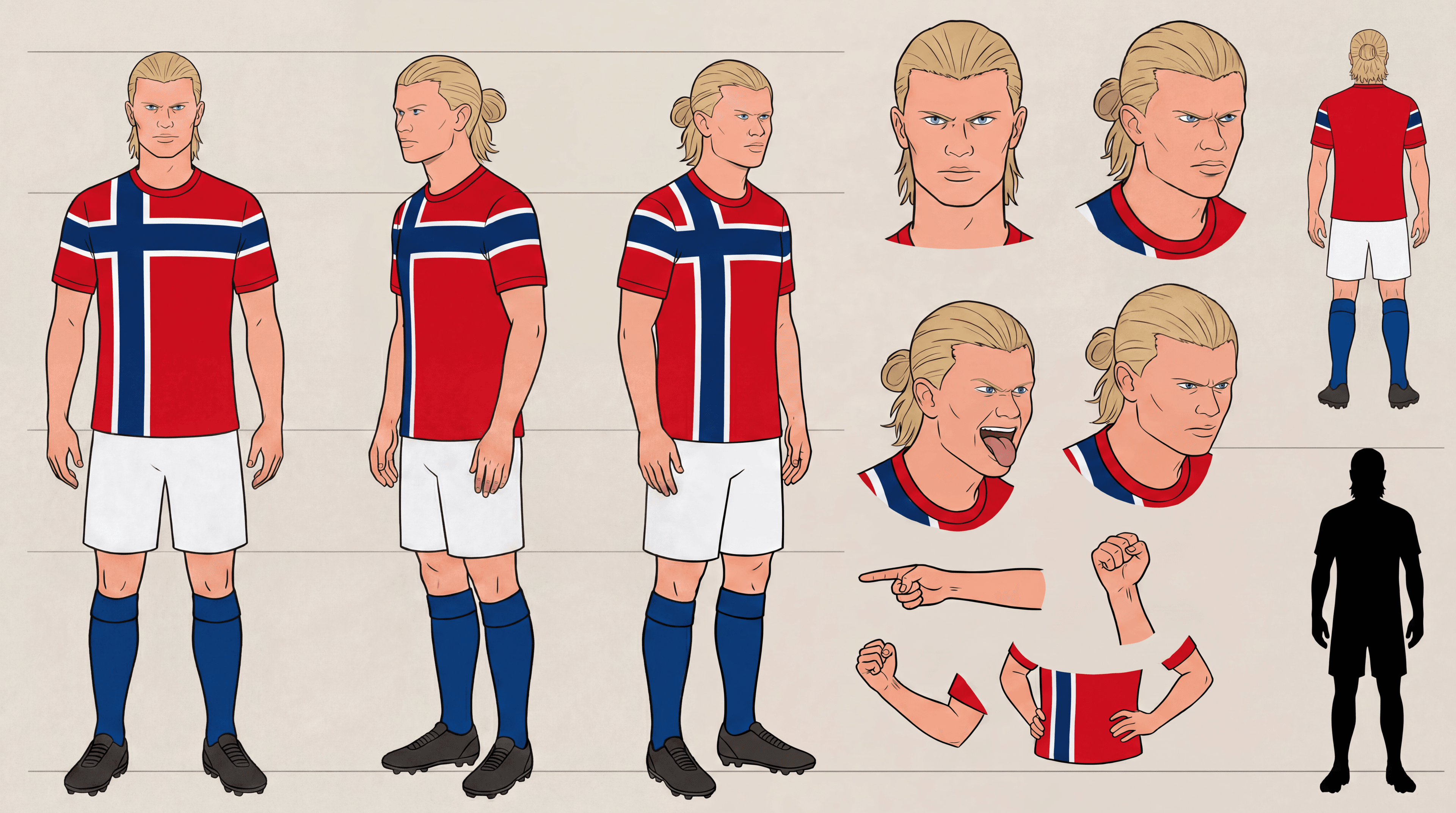
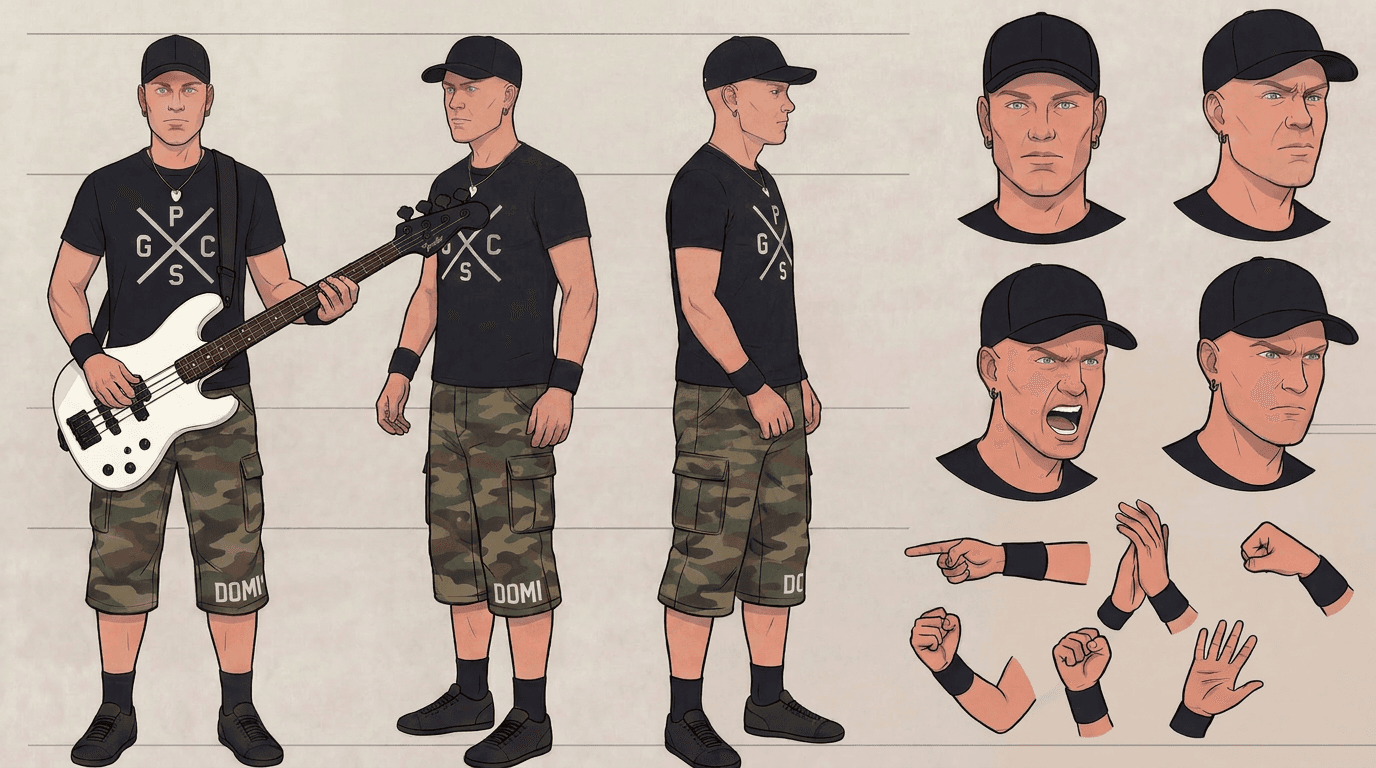
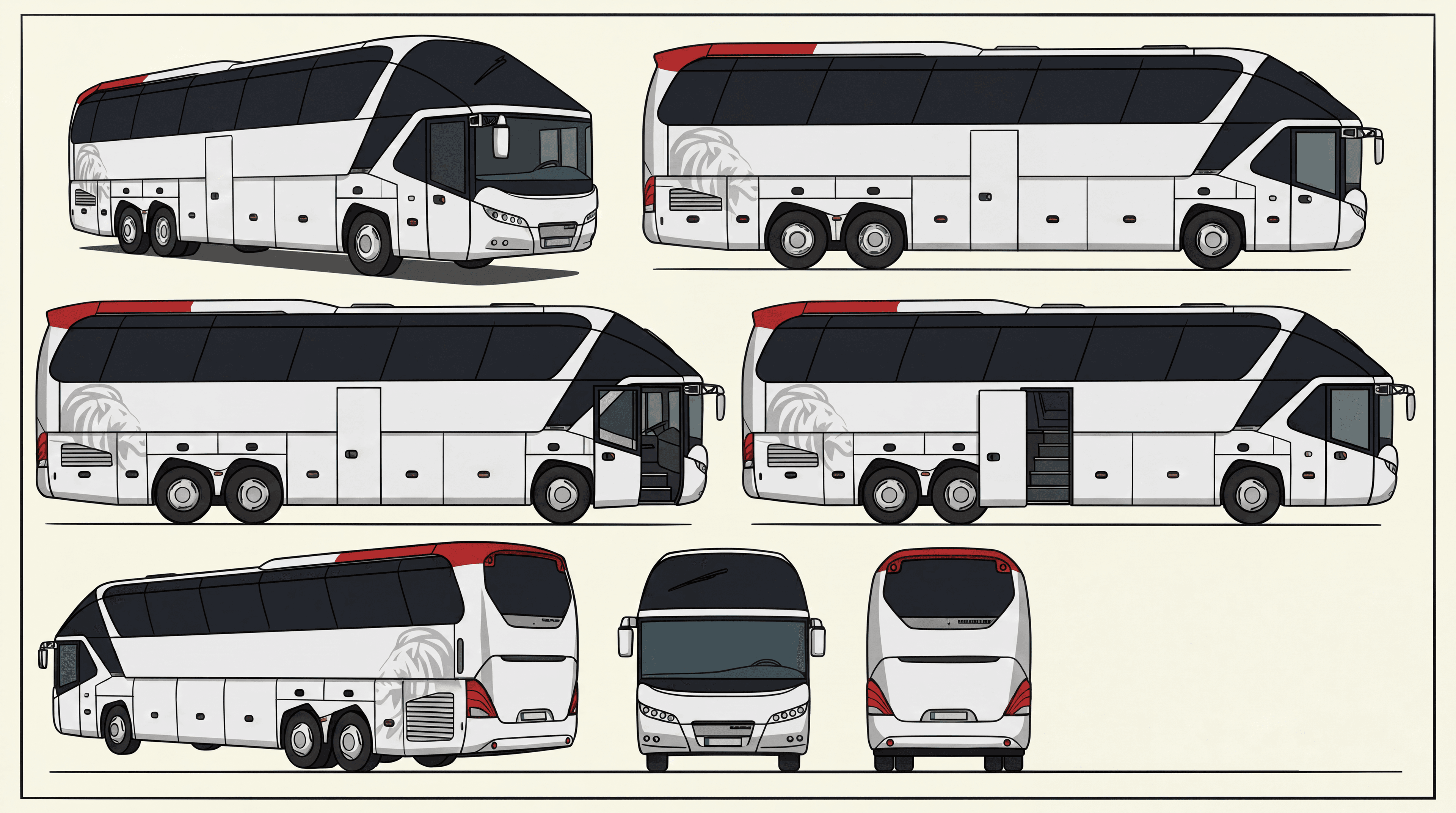
Every character, location, and recurring object got a reference sheet. These were fed as image references into every single Runway generation.
Characters
Each character: turnaround views, expressions, action poses, silhouette. The team — Ståle, Haaland, Ødegård, Nusa — and our own band members. Locked down before any video generation started.
Locations
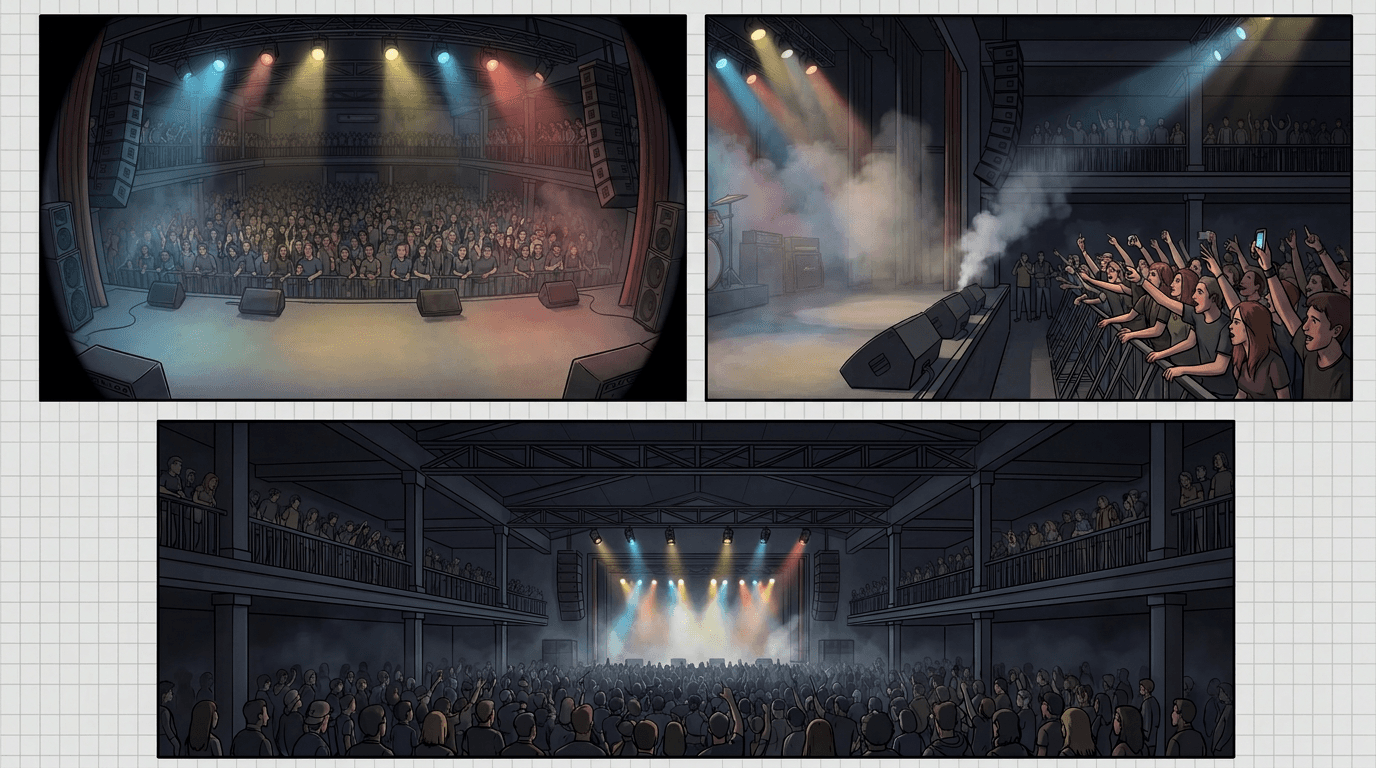
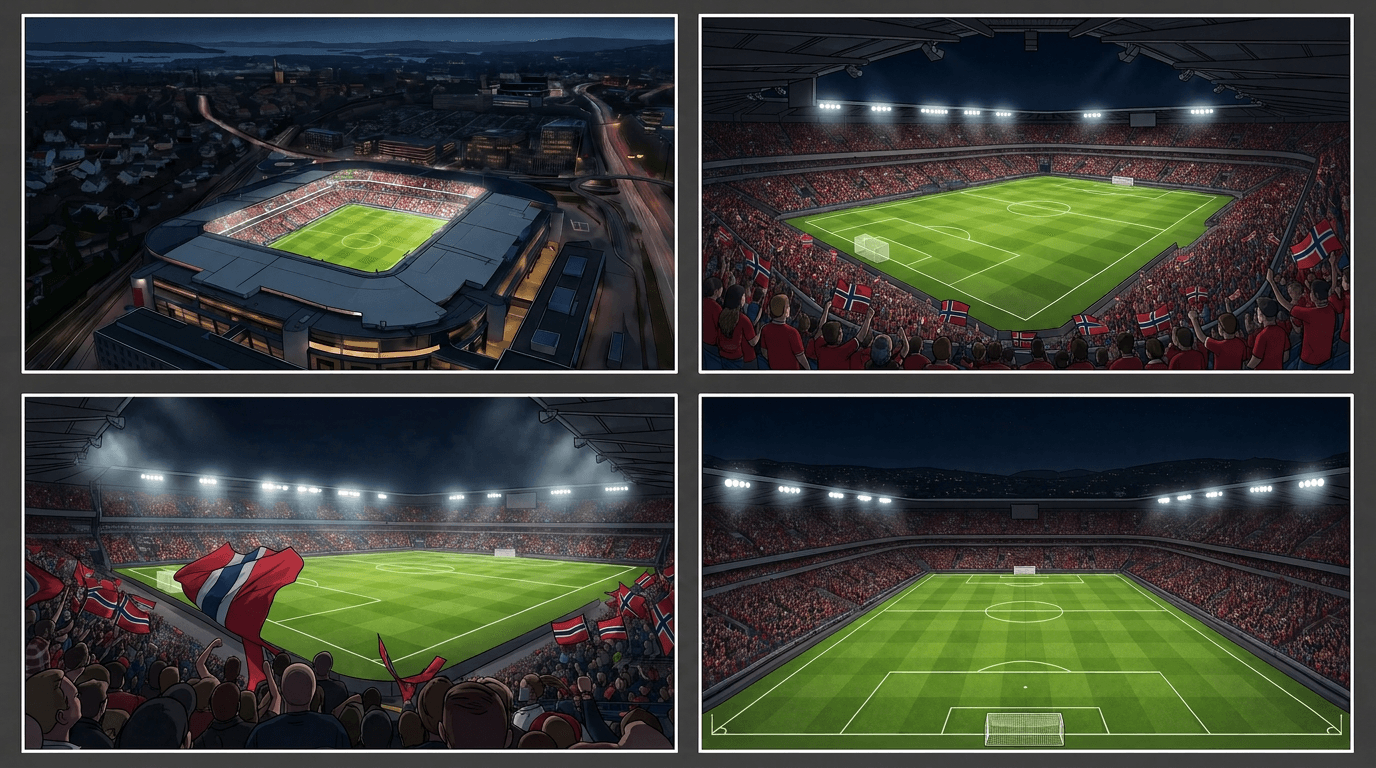
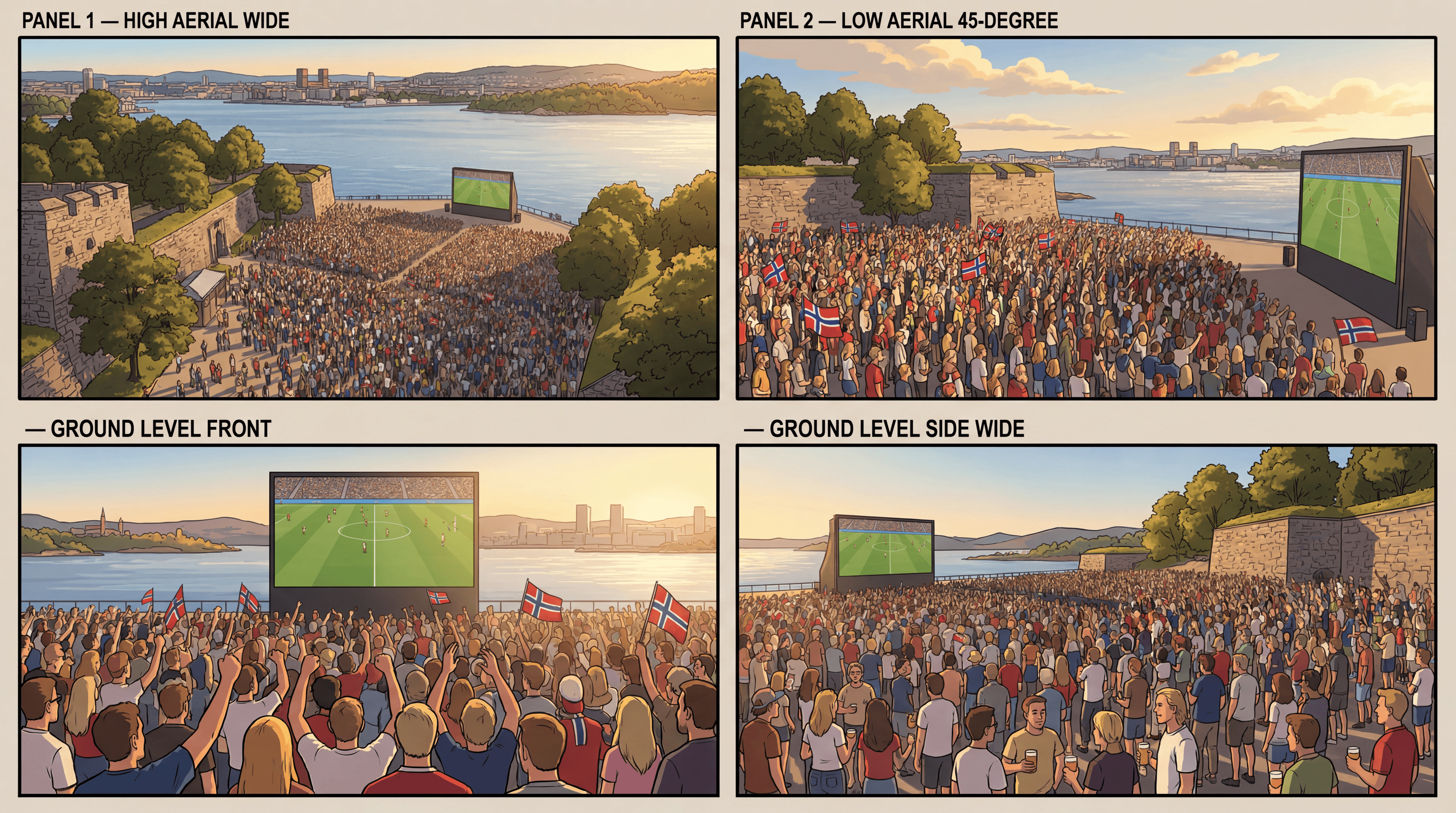
Real photos of Rockefeller, Ullevål, and Kontraskjæret were first translated into the illustration style, then turned into multi-panel reference boards. Every generated scene at that location was anchored to its board.
Props
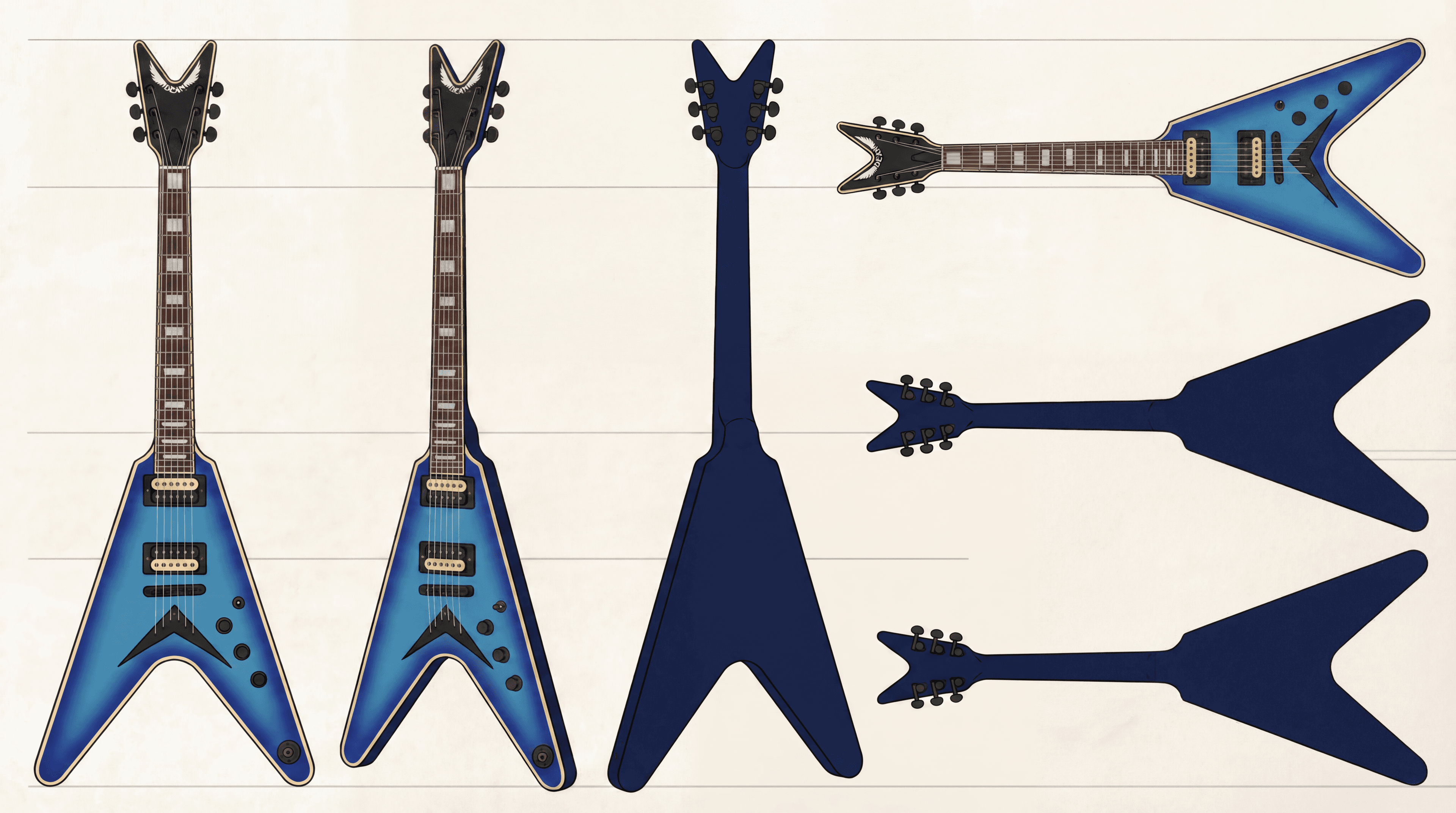
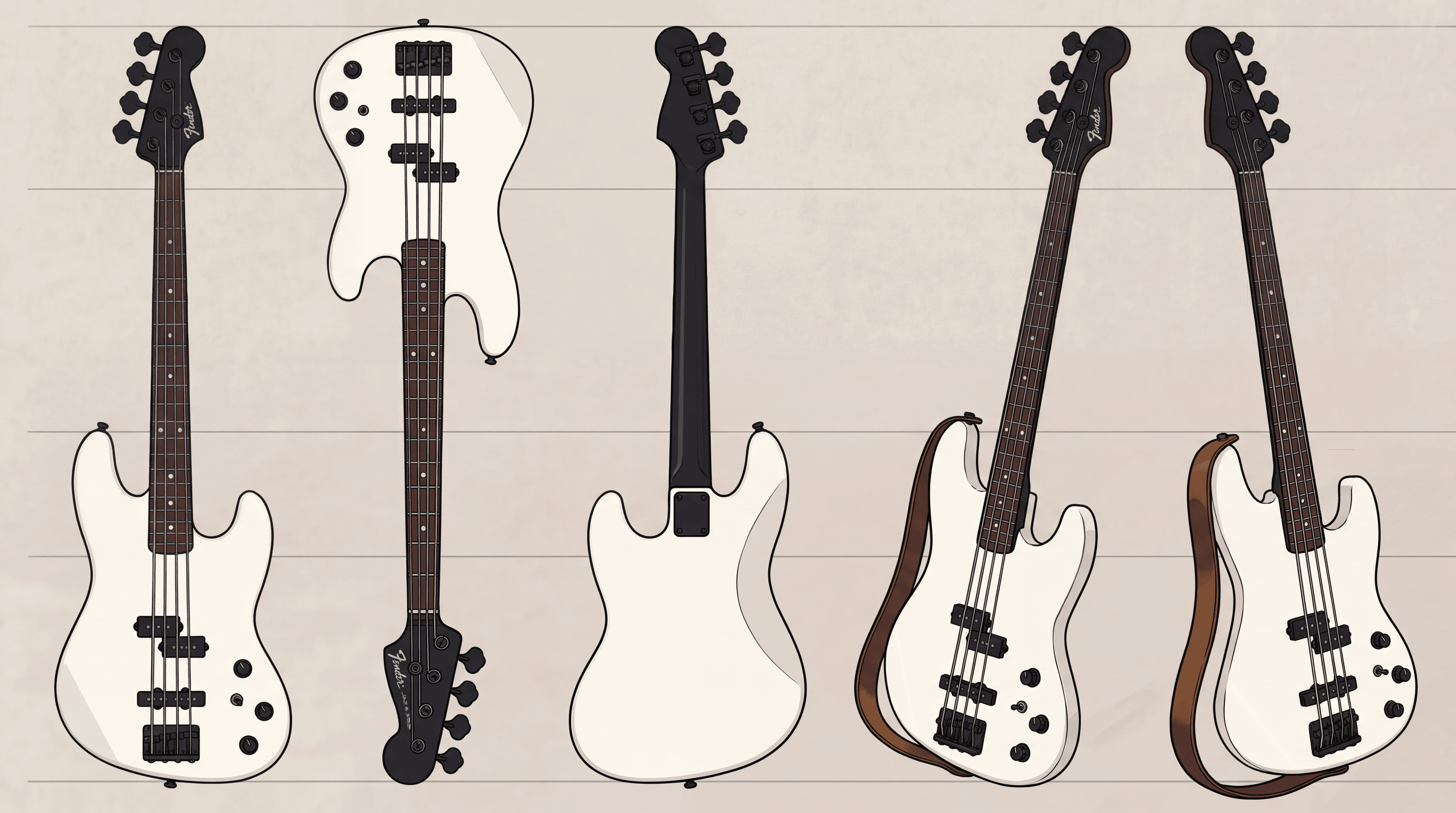
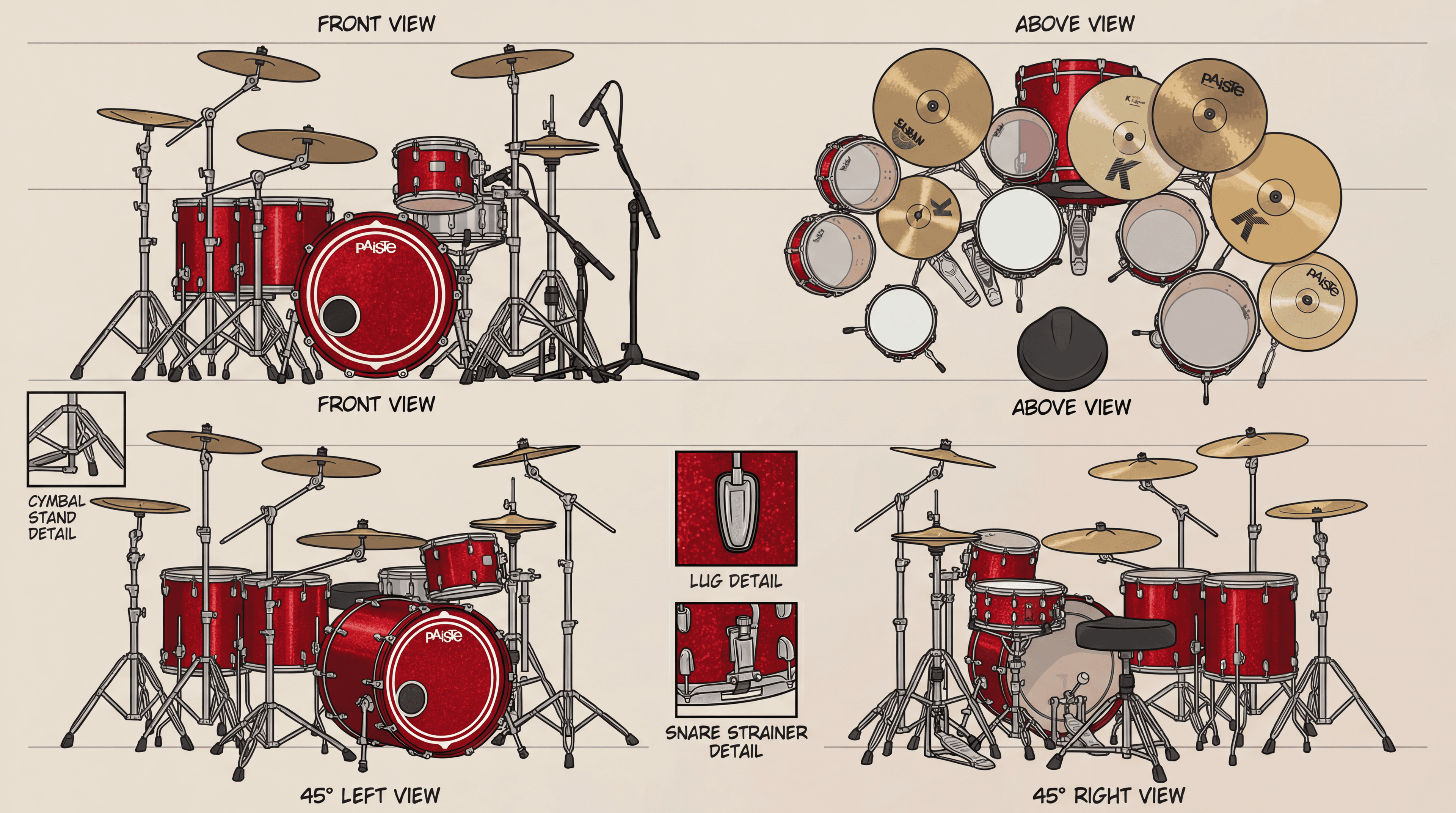
Every instrument and the tour bus got the same treatment — enough angles to know exactly what each object looks like from any direction.
The workflow
Raw reference photos → translate into the illustration style → build reference sheets → feed sheets into every Runway ML generation → edit and sequence in DaVinci Resolve.
The editing alone — cutting 60+ clips to music, timing to lyrics, pacing the story — was its own full job on top of everything else.
The art of the prompt
The part people don't talk about much: writing the actual video prompts is directing. Not in a loose sense — in a very literal one. Every clip needs a shot type, a camera angle, a camera movement, a pace, and a description of exactly what happens and in what order.
A prompt isn't 'Haaland scores a goal.' It's a timestamped shot breakdown with character references, negative constraints, camera instructions, and speed changes — closer to a cinematographer's shot list than a text search query. Here's a real one from the video:
Example prompt — qualifier match clip
[CHARACTERS]
Players on the Norwegian team are @team_norway. Moldovan team is @Moldova_team and wear @jersey_moldova.

[NEGATIVE]
No numbers on jerseys. No names on jerseys. No duplicate players in frame. No style inconsistency between cuts. No Moldovans look like the Norwegian players.

[SCENE — 15s, floodlit night]

[0:00–0:02] Aerial drone descending fast into packed floodlit stadium at night. Red and blue crowd, Norwegian flags. Camera pushes down toward the pitch.

[0:02–0:05] @odegard5 at center circle, ball at feet, opponents closing. Low arc shot swings around him. He drives a pass left. Extreme close-up of boot striking ball, dirt flying. Camera whip-pans left.

[0:05–0:07] Wide shot — @odegard5 alone, follow-through pose after pass. Low angle, stadium behind him.

[0:07–0:10] @nusa5 receives on left flank, sprints, cuts past a defender. Low tracking camera beside him. He reaches the byline and whips a lofted cross right into the box.

[0:10–0:11] Penalty box wide shot — @nusa5 completing cross left of frame, @haaland arriving right, coiling into his jump.

[0:11–0:14] SLOW MOTION 25% speed. @haaland launches into a scissor kick — body fully horizontal and airborne, legs scissoring. Camera performs a smooth slow 360-degree orbital rotation around him, starting low front angle sweeping to behind as he strikes. Ball rockets top corner. Goalkeeper beaten. Net ripples in slow motion. Hold until ball hits net.

[0:14–0:15] Snap to full speed. Close-up of @haaland roaring, fist raised. Cut to wide stadium — crowd erupting, flares, flags. Aerial pullback above exterior, fireworks bursting over roof.
Every decision in there is a directing decision: who is on screen when, where the camera is, how it moves, when it slows down and snaps back. The negative prompts are their own discipline — learning what to explicitly forbid is as important as knowing what to ask for.
And then most prompts don't land on the first try. You get something close, figure out which part caused the problem, adjust, and regenerate. It's iterative in the same way editing is — you're working toward something specific, not just accepting what comes out.
The video is the song — made by underdogs, about underdogs.
The song is about 28 years of scrappy persistence — showing up, taking the hit, refusing to quit. There's something fitting about making the video the same way: with what you've got, figuring it out as you go.
It took real work — writing a script, building a production bible, weeks of generating and throwing things out and starting again, then editing it all together. The tools are new but the process isn't that different from any other creative project. You have an idea, you try to make it real, and most of it doesn't work until it does.
Hopefully it's a useful thing for other DIY bands to see. You don't need a big budget to make something visual anymore — you just need a story worth telling.